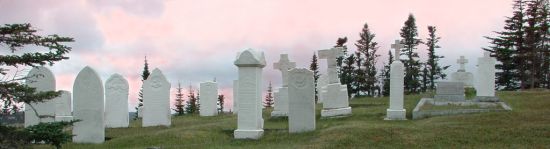
A Unique Method For Cleaning Headstones There are many web pages on the internet about techniques for cleaning headstones, but this idea is unique among them because it is completely natural, non-destructive, and based on many field observations in Newfoundland cemeteries.
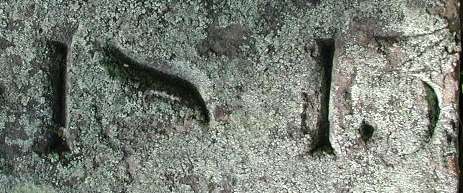
The photo at the right shows a close-up picture of the number "68" after it had been partially cleaned by the snail appearing at the bottom. Snails were observed consuming everything that grows on a stone: lichens, mold, fungus, and algae. A stone was found in St. John's that had been placed face-down on some 2x4's after it had broken in half. Being only a few inches above the ground on the 2x4's created a high moisture environment on the face of the stone. The moisture softened the lichens and attracted a large number of snails for a feast. The face of the stone was almost pure white again! Comparison of the stone on the ground with the stub that was still standing showed a tremendous change. Although not tested, here is a unique cleaning method that should be excellent for a stone heavily covered in lichens: Regardless of whether the stone is standing or has fallen over, build a small tent over it with wood and polyethylene to create a miniature greenhouse. Go around to the other stones in the cemetery and collect a handful of snails. Put them inside the tent and seal the exits to prevent them from escaping. Use fine mesh wire or fabric to provide some ventilation. The dense lichens on the stone in the following picture cover the details of the date and make "1843" look like "1813". Hungry snails should be able to clean it quickly without damaging the stone.
 Spring might be the best time of the year to do this so that hot summer temperatures do not cause the tent to overheat. Be the first one to try this method and report your results here! |